Healthcare Website Guide
Healthcare websites patients can trust quickly.
Before a patient calls, books, or fills out a form, the website has to make the practice feel safe, credible, current, and easy to reach on a phone.
Best for new or established medical, dental, therapy, med spa, wellness, optometry, chiropractic, and specialty practices ready to earn patient trust and qualified inquiries.
What Matters
The first screen should feel calm and useful.
Patients are often comparing options quickly. The page should answer the basics before they have to dig.
Practice fit
Make the specialty, location, and primary services obvious in plain language.
Provider credibility
Use real provider photos, credentials, training, and bio structure that feels human.
Booking clarity
Patients should know whether to call, book online, request a visit, or start intake.
Review context
Reviews, testimonials, and reputation cues should support trust without making clinical promises.
Insurance or financing
Where relevant, explain payment expectations without burying the patient in policy language.
Mobile speed
The site should load and read cleanly on the phone people use while comparing providers.
By Specialty
Different practices need different page structure.
A dental site, med spa site, and therapy site should not sound like the same template with different nouns.
Dental practices
Emergency care, new patient flow, cosmetic services, financing, insurance, and provider confidence need clear paths.
Med spas and wellness practices
Regenerative medicine, PRP, injectables, body treatments, and aesthetic surgery need distinct service pages, provider context, approved images, and a clear booking path.
Medical practices
Provider bios, treatment pages, location clarity, patient resources, and intake routing should feel organized and calm.
Therapy groups
Visitors need to understand fit, specialties, insurance, availability, telehealth, and the first-session path.
Specialty clinics
Patients need service clarity, what to expect, recovery or visit details, and enough proof to take the next step.
Healthcare pricing
See the build tiers for a focused refresh, full practice rebuild, or custom multi-location site.
Healthcare websites you can inspect.
TMN Creative's case studies show the public website, the patient journey, and the work our studio delivered. Each links to a live client site that credits TMN.
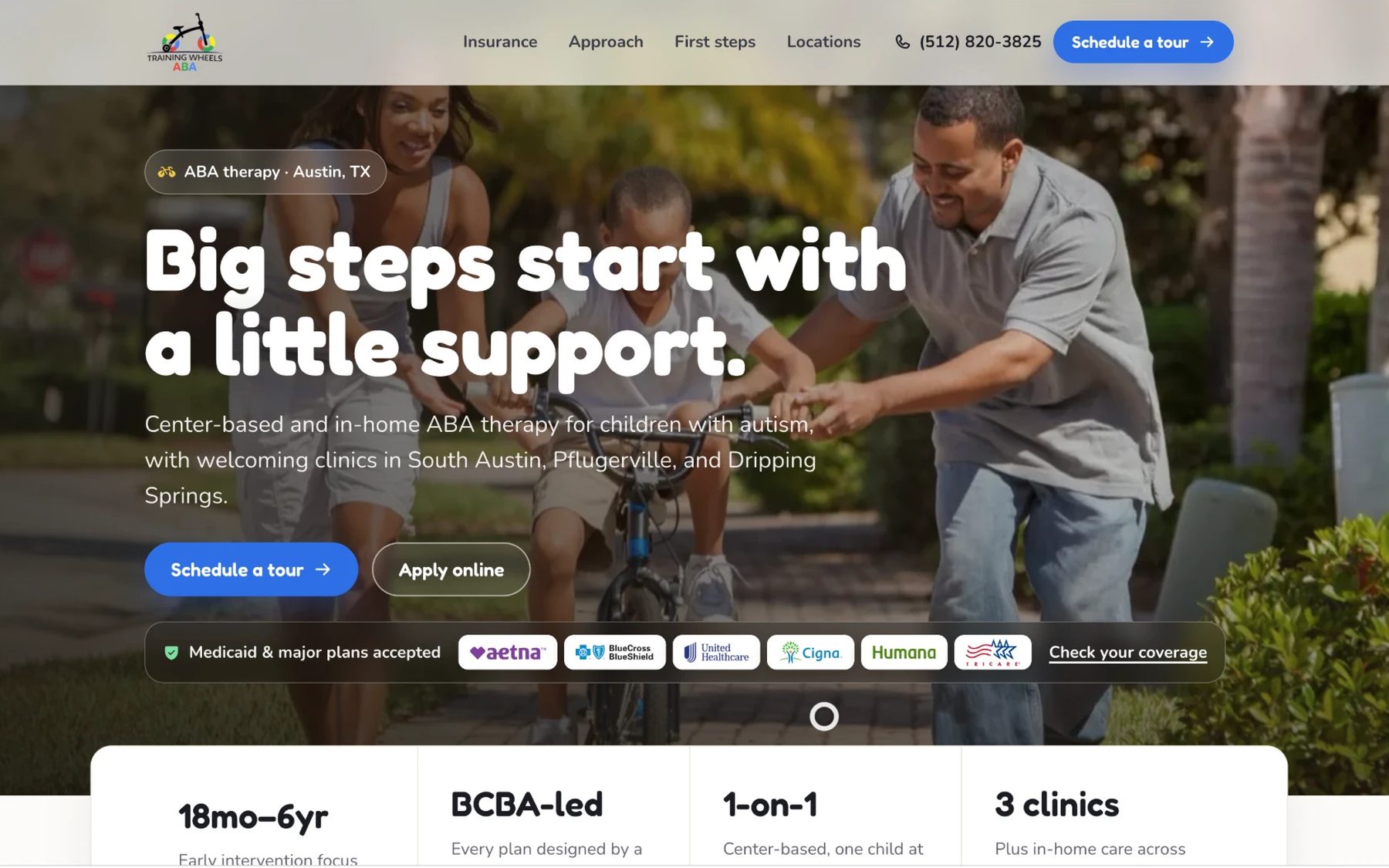
Training Wheels ABA: location-specific information for 3 Austin-area clinics, a parent application path, and a separate careers route.
LumiClinics: a psychiatry and therapy practice with named providers, insurance information, and online booking and phone intake.
Smitha Reddy MD: physician credentials and care-model information, with patient inquiries routed to Functional Health Institute.
Cost Comparison
How much does a healthcare practice website cost?
TMN pricing is published below. The wider-market row is a general Clutch benchmark, not a healthcare-specific average.
| Option | Published or sourced price | Billing model | Scope note |
|---|---|---|---|
| TMN Starter Refresh | $2,250 | One-time flat fee | Focused homepage scope. Booking, service, analytics, and intake work are included only when listed in the signed scope. |
| TMN Full Site Rebuild | $3,750 | One-time flat fee | Multi-page scope with the exact pages, copy, integrations, migration work, and review workflow confirmed in writing. |
| TMN Custom Studio Build | $5,000+ | One-time flat fee | Custom scope for deeper brand, multi-location, gallery, integration, accessibility, or review needs. |
| General web-design benchmark | $2,000-$100,000 | Varies by provider | Clutch's cross-industry project range. It is not a healthcare-specific average and package contents vary. |
Planning a concierge practice website under $12,000?
TMN Creative's Full Site Rebuild starts at $3,750 and Custom Studio Build starts at $5,000. Both start below that budget, but the final quote depends on the agreed work. A concierge or direct primary care website needs to explain the care model, membership or payment terms, physician credentials, and how a new patient gets started.
Before comparing quotes, list the service pages, providers, locations, and content to migrate. Confirm whether booking connects to an existing practice system or requires additional work, who reviews the content, and what happens after launch. TMN builds the public website. Patient portals, EHR development, and clinical approval are outside that scope.
A new practice does not need an existing website to begin. For a wellness or aesthetic medical practice, the scope can include practice-approved pages for regenerative medicine, PRP treatments, trigger point injections, liposuction, and related services. If the practice already uses separate systems for scheduling, calls, patient communication, CRM, or marketing leads, TMN first maps the public website into those existing paths. Exact connections depend on the vendor, account permissions, plan limits, and privacy review.
Keep ongoing costs separate from the build quote. Optional Site Care starts at $50 per month, and practice software or other third-party subscriptions may carry their own fees. Confirm file ownership, account access, support, and any self-publishing needs in the written scope before committing.
Questions Buyers Ask
Short answers for practice owners.
What should it include?
Provider bios, service pages, location details, booking paths, reviews, insurance or financing notes, accessibility, and mobile-first CTAs.
How should intake work?
Review every public field, destination, vendor, plan, configuration, safeguard, contract, and tracking technology. The practice's privacy reviewers approve the final flow.
What does it cost?
TMN healthcare websites start at $2,250 for a refresh, $3,750 for a full rebuild, and $5,000+ for custom practice builds.
Want a more credible practice website?
Tell us about the practice, specialties, locations, patient path, existing systems, and review requirements. We will recommend the smallest serious scope that can improve trust and qualified inquiries.