Mobile-First Web Design Agency

Mobile-first websites with lean load times and Core Web Vitals that pass.

TMN Creative builds hand-coded mobile-first websites tuned for high Lighthouse mobile scores, fast loads on 4G, and clean Core Web Vitals (LCP, INP, CLS). 70%+ of your traffic is mobile — your site should be designed for the phone first, then scaled up to tablet and desktop. Touch-optimized UX. Click-to-call CTAs. Sticky mobile nav. Structured for AI-assisted search. First paid draft in 72 hours. Starting at $2,250.

72h
First draft
40+
Sites shipped
5.0
Google rating
100%
Custom code
Why TMN

Premium sites. Shipped in days.

Every site is hand-coded, conversion-focused, and built around your actual business. No templates. No retainers. No lock-in.

01

Hand-coded

Every line of HTML and CSS is written by us. No page builders, cleaner code, and lean mobile performance.

02

Conversion-first

Every page is designed to answer a buyer's real question and move them toward a clear next step.

03

You own it

Code, copy, domain, hosting access. Everything transfers to you. No retainer required.

Selected Work

Built by us. Live right now.

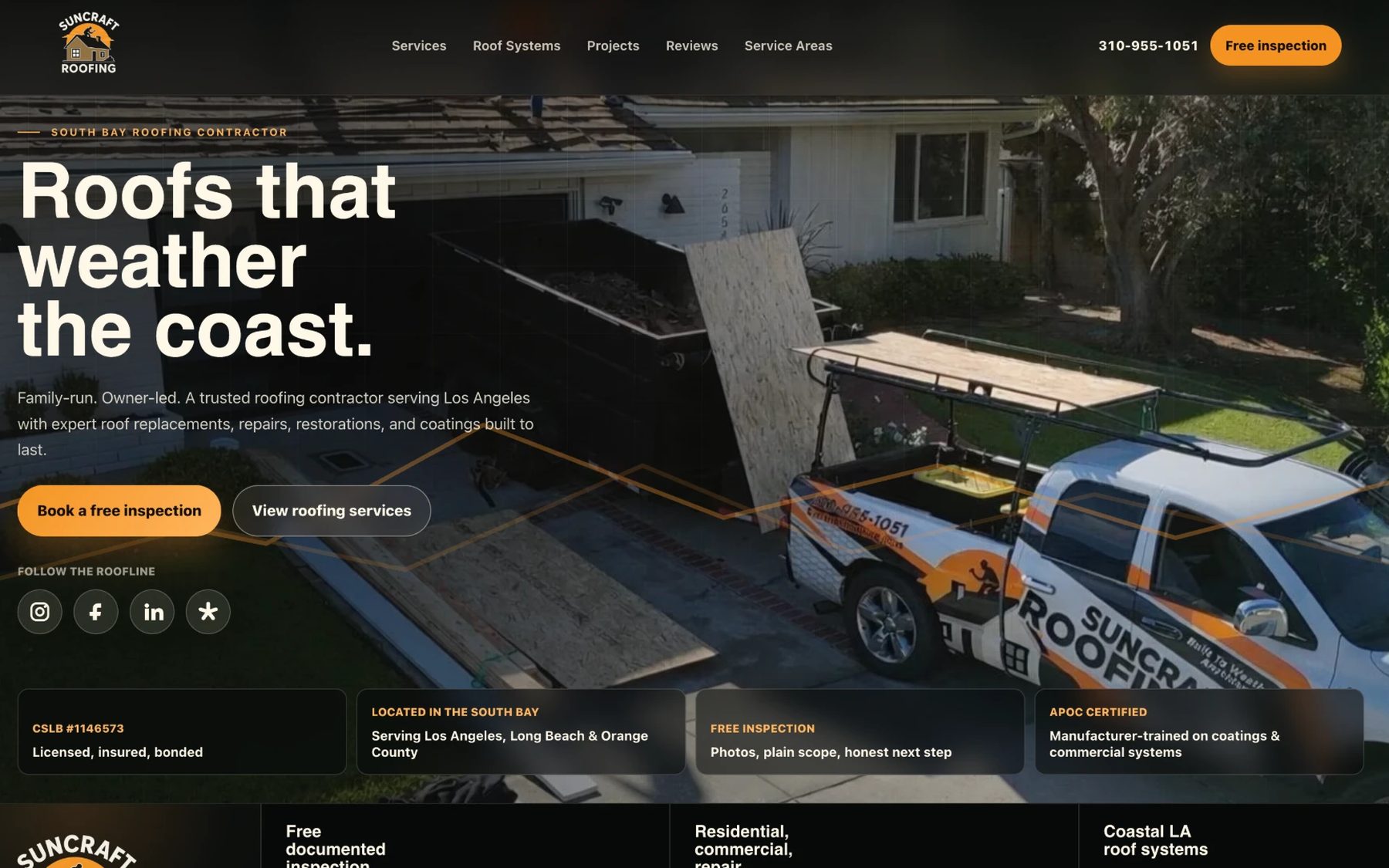
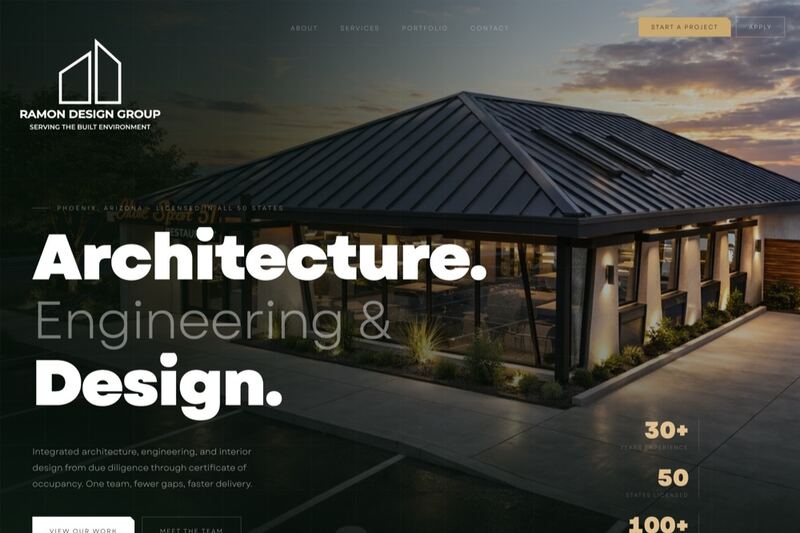
A few recent builds that speak to the standard.

What Mobile-First Means

Designed for the phone first, not last.

Most agency sites are designed at 1440px and squeezed down to mobile as an afterthought. We build the opposite way: layouts, hierarchy, and CTA architecture are designed for a 390px screen first, then scaled up.

01

Responsive design done right

Fluid layouts that work from 320px to 1920px. CSS clamp(), container queries, and grid systems sized in viewport units, not fixed pixel breakpoints.

02

Touch optimization

Tap targets are 48x48px minimum (Apple HIG and WCAG 2.5.5). Sticky CTAs always visible. Click-to-call and mailto links wired by default. No hover-only menus.

03

Fast mobile load target

Hand-coded HTML/CSS, system fonts where possible, font-display:swap, lazy-loaded images, no render-blocking JavaScript. Built for fast mobile loads on 4G.

04

Core Web Vitals tuned

LCP under 2.5s, INP under 200ms, CLS under 0.1. We test on real devices and lab data, not just Chrome desktop. PageSpeed Insights green by default.

05

AMP not needed

AMP was deprecated as a ranking signal in 2021. A properly built mobile-first hand-coded site is faster than AMP without any of the limitations.

06

Mobile UX patterns

Bottom-anchored primary CTA. Sticky nav with click-to-call. Autocomplete-friendly forms. Autofocused first input. iOS-friendly viewport handling.

07

Image optimization

WebP with AVIF fallback. Responsive srcset. Lazy-loaded below-the-fold images. Width and height attributes set to prevent CLS. ImageKit / Cloudinary / native responsive images.

08

Network-aware

Preload critical assets. Defer non-critical JavaScript. Resource hints (preconnect, prefetch). System fonts where possible. Optional offline support via Service Workers.

09

Real-device tested

We test on real iPhone and Android hardware, not just Chrome DevTools. Different rendering paths, different network speeds, different input behaviors all matter.
What's Built In

Built into every mobile-first site we ship.

Mobile is no longer an afterthought. It is the primary canvas. Here is what makes that work.

01

Hand-coded HTML/CSS

No WordPress, no Wix, no Webflow JavaScript overhead. Lean, fast code that renders quickly on cheap Android hardware and slow networks.

02

Click-to-call & mailto wired

Phone numbers and emails wired with proper tel: and mailto: links by default. Conversion tracking fires on tap so you see real attribution.

03

Sticky mobile CTAs

Bottom-anchored primary CTA always visible. Pattern shown to lift mobile conversion rates 15 to 35 percent on service-business sites.

04

Autofocused first form field

Mobile keyboards open instantly when forms are reached. Field types match input semantics so users get the right keyboard (numeric, email, tel).

05

Reduced typing friction

autocomplete attributes set on every field. address-line1, family-name, given-name, tel, email — so 1Password, iCloud Keychain, and Google autofill work cleanly.

06

AI-readable structure + schema

LocalBusiness, Organization, Service, FAQPage schema. Structured so AI-assisted search tools can parse your pages more reliably. AI-readable foundations built in by default.

07

WCAG 2.2 AA accessibility

Color contrast, keyboard navigation, screen reader semantics, focus states, form labels. Mobile-specific accessibility (touch target sizing, swipe gestures, voice control).

08

iOS & Android tested

Real-device testing on iPhone (Safari) and Android (Chrome, Samsung Internet). Different rendering engines, different gesture systems, different defaults.

09

You own everything

Code, copy, design files, domain, hosting access — yours on day one. No proprietary CMS lock-in. If you ever leave, you take the site.

Pricing

Flat-fee mobile-first web design. No retainers.

Three tiers. Every tier ships mobile-first by default with Core Web Vitals tuning, schema markup, and full code ownership.

$2,250

Starter Refresh

Single-page mobile-first homepage rebuild. Strong mobile Lighthouse scores, fast load targets, click-to-call. Live within a week.

$3,750

Full Site Rebuild

Multi-page mobile-first site with touch-optimized navigation, sticky mobile CTAs, autofocused forms, full Core Web Vitals tuning, and SEO foundations.

$5,000+

Custom Studio Build

Larger mobile-first sites with advanced performance budgets, custom integrations, PWA functionality, and dedicated founder engagement.

See full pricing & site care plans
FAQ

Common questions about mobile-first web design.

Answers to what we hear from operators and marketers when they ask about mobile performance.

Why does mobile-first web design matter in 2026?

More than 70% of website traffic in 2026 is mobile. For local service businesses, healthcare practices, restaurants, and home services, mobile share is often 80 to 90 percent. Google has been mobile-first indexing the entire web since 2023, which means your mobile experience is what Google ranks. A site that looks great on desktop but degrades on mobile actively loses rankings, traffic, and conversions. Mobile-first design is no longer optional in 2026 — it is the default starting point for any serious website.

What Lighthouse score should a mobile-first site target?

For a competitive 2026 site, you want a strong Lighthouse mobile Performance score in the 90+ range, with high-90s being the standard for premium hand-coded builds. Accessibility, Best Practices, and SEO scores should also target the 90+ range. WordPress and Wix sites typically score in the 40 to 70 range on mobile Performance because of plugin weight and unoptimized JavaScript. Hand-coded sites built by TMN Creative are designed around those mobile Performance and Accessibility targets because fast, accessible pages give both users and search systems a cleaner experience.

What are Core Web Vitals (LCP, INP, CLS) and why do they matter?

Core Web Vitals are three Google metrics that measure user experience: Largest Contentful Paint (LCP) measures how fast the main content loads — the target is under 2.5 seconds. Interaction to Next Paint (INP) measures input responsiveness — the target is under 200 milliseconds. Cumulative Layout Shift (CLS) measures visual stability — the target is under 0.1. Google uses Core Web Vitals as a ranking factor and shows the metrics in Search Console. Sites that pass all three give users and search engines a healthier experience. Hand-coded sites are designed around Core Web Vitals from the start; plugin-heavy WordPress and Wix sites often need extra cleanup to pass.

Why does hand-coded beat WordPress on mobile?

WordPress sites typically load 200 to 600 KB of plugin JavaScript before any content appears. Page builders like Elementor, Divi, and WPBakery add another 300 to 800 KB of CSS and JavaScript. Each plugin adds load time and risk of layout shift. Hand-coded sites ship only the HTML, CSS, and JavaScript that the page actually needs — typically a small fraction of typical WordPress page weight. The result is fast mobile loads on 4G, healthy Core Web Vitals, and high Lighthouse scores out of the box.

How much does a mobile-first website cost?

Mobile-first web design at TMN Creative starts at $2,250 for a Starter Refresh (single-page homepage rebuild with Core Web Vitals optimization and click-to-call), $3,750 for a Full Site Rebuild (multi-page mobile-first site with touch-optimized navigation, sticky mobile CTAs, autofocused forms), and $5,000+ for Custom Studio Builds (larger sites with advanced performance budgets, custom integrations). All flat fees, no retainers, no monthly hosting lock-in.

Do you support AMP or PWA functionality?

AMP is no longer needed in 2026 — Google deprecated AMP-specific ranking benefits in 2021, and a properly built mobile-first hand-coded site is faster than AMP without any of the limitations. We do build progressive web apps (PWA) when offline functionality, install-to-home-screen, or push notifications make sense for your business — typically e-commerce, member portals, or field-service apps. Most marketing sites do not need PWA functionality.

Are TMN Creative mobile-first sites prepared for AI-assisted search and ChatGPT?

Yes. Every site gets AI-readable foundations by default. We mark up your business with appropriate schema (LocalBusiness, Organization, Service), your services with Service schema, and your FAQ content with FAQPage schema so search tools and AI assistants can read the page cleanly. We also write service pages in the question-answer format search systems can read cleanly. Clear, fast, well-structured pages are easier for AI and search systems to understand when researching options.

Ready to get started?

Tell us about your business. We’ll put together a free custom homepage so you can see the direction before committing. No retainer. No pressure.
