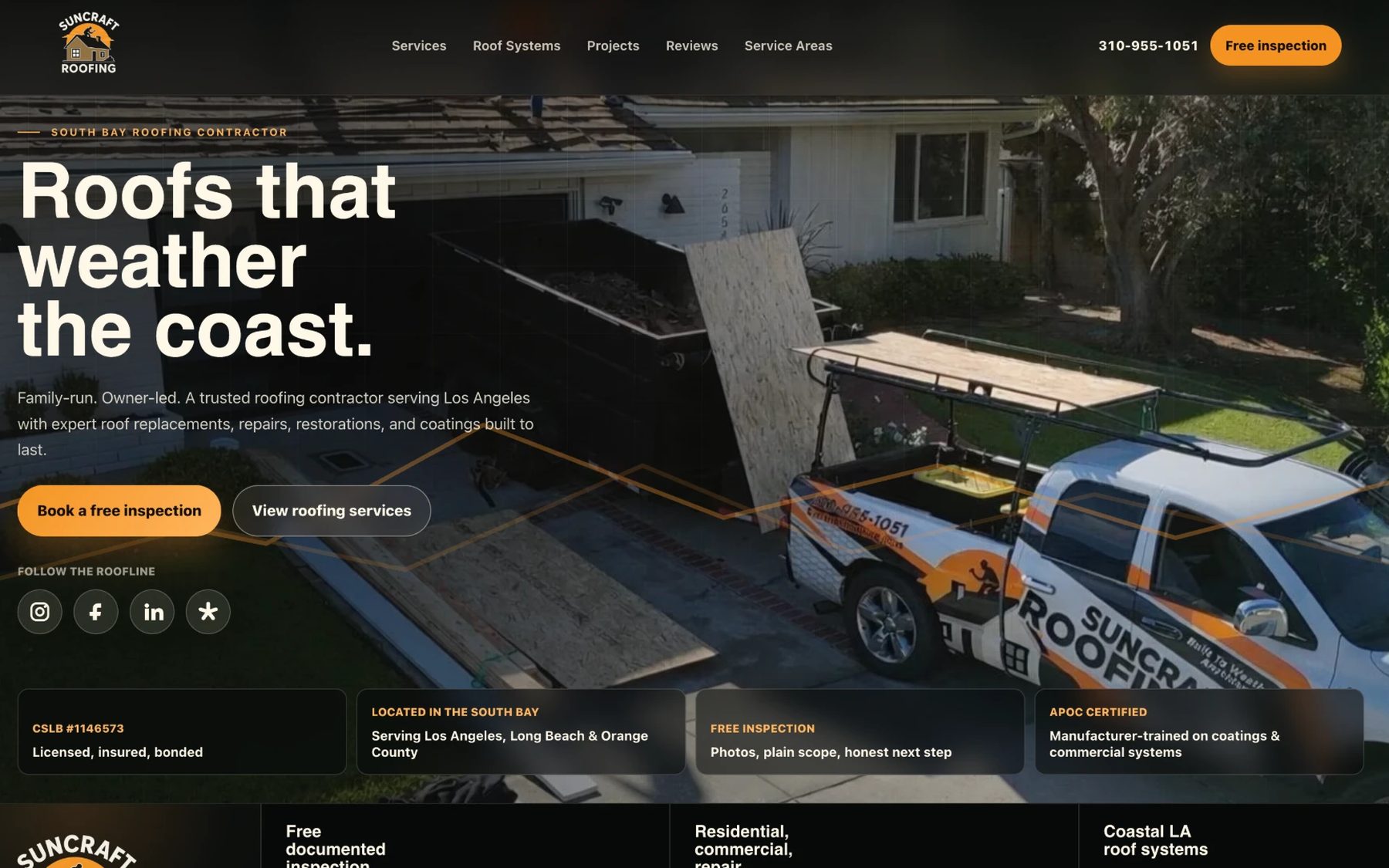
The page, form, and handoff have to agree.
Lead generation works as a system. Hero hierarchy, form friction, CTA placement, measurement, and lead routing have to support the same buyer path.
Hero CTA architecture
One primary action above the fold. Clear value statement, one-line proof, primary CTA, and a fallback secondary CTA for not-yet-ready visitors. No carousel sliders. No competing options.
Forms matched to the ask
We choose field count, conditional logic, defaults, and validation around the qualification the business actually needs. Form abandonment can be measured when the selected analytics setup supports it.
Testing after a baseline
We scope split testing when a page has enough qualified traffic to learn from it. Headline, CTA, form length, and proof are common starting points.
Lead magnets & offers
Projects can include downloadable guides, checklists, calculators, assessments, or gated case studies. Delivery and nurture steps are scoped to the client's selected tools.
Optional retargeting
Retargeting pixels and audiences can be configured in the client's selected advertising platforms after consent, privacy, and audience requirements are confirmed.
Measurement that fits
We configure the client-selected analytics and advertising stack around meaningful actions. Browser or server-side events are added only when the platform, consent setup, and backend support them.
Calendar booking integrated
Calendly, Acuity, SavvyCal, HubSpot Meetings, and Cal.com can be embedded or routed to a dedicated booking page. Booking events are recorded when the selected tool supports them.
CRM & lead routing
Forms can route to the client's selected CRM through a verified native integration, webhook, Zapier, or Make. Available source fields travel with the lead when the destination accepts them.
Lean mobile performance
Hand-coded HTML and CSS keep the delivery layer lean. We test defined breakpoints and measure the approved build after deployment.